Wondering how to sell an estate-style home in West Newbury without leaving money on the table? In a market where buyers still compete for standout properties, larger homes and parcels also invite more scrutiny. If you are preparing to sell, the right plan can help you highlight what makes your property special, answer buyer questions early, and avoid delays later. Let’s dive in.
West Newbury Market Conditions
West Newbury remains a high-price, low-inventory market, but the numbers vary depending on the data source. Redfin reported a median sale price of $1,059,366 for the three months ending May 2026, with homes selling in 21 days on average. Zillow’s home value index for West Newbury was $957,549 as of May 31, 2026, while Realtor.com reported a median listing price of $1.2 million.
What do those numbers mean for you as a seller? They point to a market near the $1 million mark with limited supply, but not a market where you can skip the basics. Buyers are still responsive, yet they are paying close attention to pricing, presentation, and the true cost of owning a larger property.
Mortgage rates also shape buyer behavior. Freddie Mac reported the average 30-year fixed rate at 6.49% on June 25, 2026. In practical terms, that means many buyers are more sensitive to utility costs, maintenance demands, and the overall upkeep that can come with an estate-style home.
Why West Newbury Storytelling Matters
Estate-style homes in West Newbury are not just about square footage. They are often about land, setting, privacy, and the way the property connects to the town’s broader character. That local context matters because West Newbury officially emphasizes rural character, open space, scenic views, farmland, and historic significance.
The town’s planning and preservation materials consistently reflect that identity. West Newbury supports open-space preservation, agricultural land, and a pattern of development that protects its rural feel. For a seller, this creates an important opportunity to position your home as part of a place buyers already value.
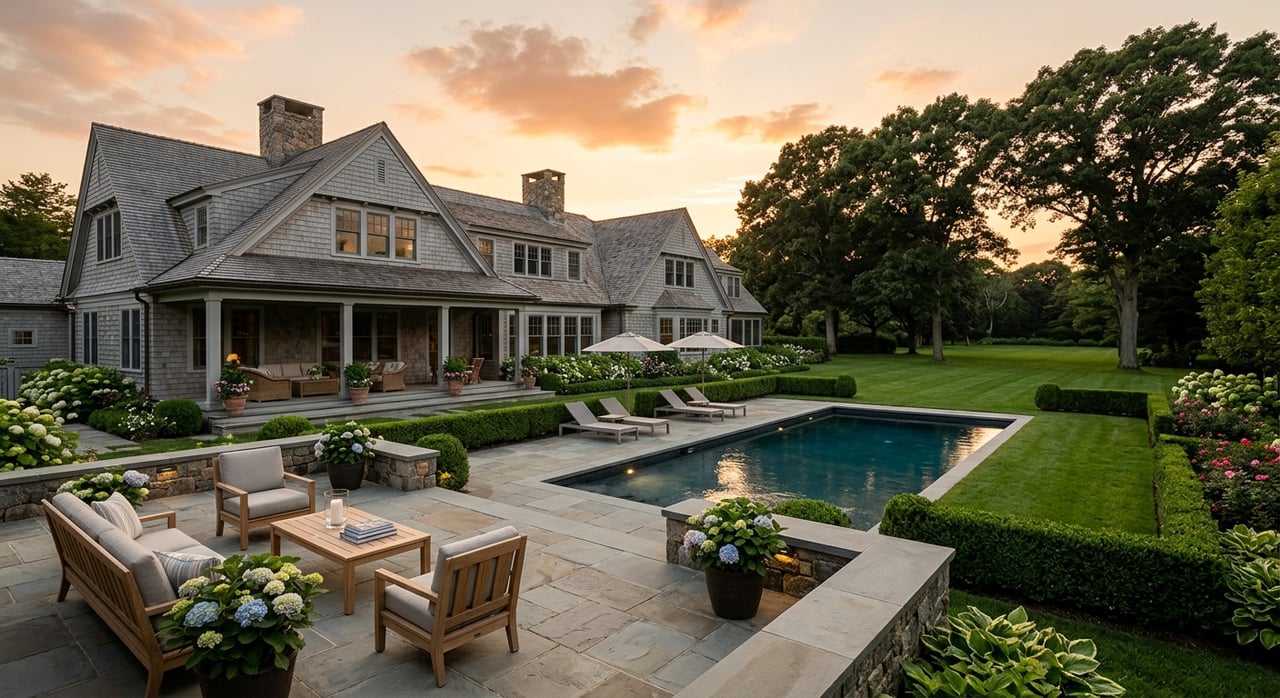
That means your marketing should go beyond room counts and finish lists. A strong listing package for an estate-style home should help buyers understand the setting, the land, and the lifestyle the property offers. In West Newbury, that can include wooded views, open fields, stone walls, trails, or proximity to conservation land.
Lead With the Land
For many buyers, the land is the headline. Larger parcels can offer visual appeal, flexibility, and a sense of separation that is hard to find in tighter markets. But buyers also want clarity about how the land can actually be used.
That is why broad claims are less effective than precise information. If your property has acreage, outdoor amenities, or a distinctive setting, those features should be documented clearly. A survey, site plan, and simple explanation of lot boundaries can make the property easier to understand and more compelling to serious buyers.
Aerial photography can be especially useful for this type of home. It helps show the relationship between the house, grounds, outdoor spaces, and surrounding landscape in a way still photos often cannot. For out-of-area buyers in particular, that kind of visual context can be a major advantage.
Historic Character Can Add Value
If your home has age or architectural significance, that can be an asset. West Newbury’s Historical Commission notes that the town includes historic homes and buildings of special significance, and the town identifies historic neighborhoods tied to early colonial and 19th-century history.
For the right buyer, historic character is part of the appeal. Original details, period architecture, and a documented place in the town’s story can help your home stand out. The key is to present that history in an organized, factual way rather than treating it as background detail.
If records, surveys, or past restoration work exist, gather them early. Buyers often feel more confident when a home’s history is explained clearly. Good documentation can turn a possible question mark into a selling point.
Due Diligence Matters More on Large Lots
With estate-style properties, pre-listing due diligence is often more important than cosmetic updates. A beautiful presentation still matters, but buyers will usually ask harder questions about land use, systems, and restrictions before they make a serious offer.
In West Newbury, the Conservation Commission has jurisdiction over projects in wetland resource areas, within 100 feet of wetlands, and within 200 feet of rivers and perennial streams. If your property includes a deck, pool, patio, driveway, shed, or addition near those areas, it is wise to understand that before the home hits the market.
Title review also deserves careful attention. Conservation restrictions, easements, or deed language can affect how buyers view the property and how they plan for future use. Surfacing those details early helps reduce surprises during the transaction.
Septic Should Be Addressed Early
For many estate-style homes in Massachusetts, septic is one of the first practical issues buyers ask about. Under Massachusetts Title 5 rules, homes with septic systems are generally subject to inspection at the time of sale, with limited exceptions. If weather prevents inspection before closing, the inspection may be completed up to six months after the sale if the buyer is notified in writing.
That makes early planning important. If you are selling a larger or older home, gather septic records, prior inspection reports, and repair history as soon as possible. Waiting until the last minute can create avoidable stress and may affect timing.
A clear explanation of septic status also reassures out-of-area buyers. Many are less familiar with rural or semi-rural properties and will appreciate straightforward information upfront.
Check Historic District Rules Before Repairs
If your property is located in the West Newbury Historic District, exterior work may require review before permits can be issued. According to the town’s Historic District By-Law, exterior alterations may need a certificate of appropriateness, hardship, or nonapplicability before the building inspector can issue a permit.
This matters if you are considering pre-listing improvements like window replacement, porch work, or exterior repairs. What seems like a simple update may involve another step. Knowing that early helps you choose improvements that support the sale without creating delays.
Not every repair adds equal value. On distinctive homes, strategic preparation is usually better than over-improving. The goal is to protect presentation, support buyer confidence, and avoid unnecessary work that may not improve your result.
Explain Carrying Costs Clearly
Today’s buyers are looking beyond the purchase price. On an estate-style property, they often want a realistic picture of ongoing costs, including maintenance, utilities, and local tax-related expenses.
One local item worth explaining is West Newbury’s Community Preservation Act surcharge. The surcharge is 3% of real property tax value, with the first $100,000 of residential property value exempt. For buyers comparing homes across different towns, clarity on that cost can help them evaluate the property with fewer assumptions.
Being transparent does not weaken your position. It usually strengthens trust. Well-informed buyers are often more comfortable moving forward, especially when a property is unique.
Create a Longer Prep Timeline
A standard home can sometimes be market-ready in a few weeks. An estate-style home usually needs more runway. Realtor.com’s 2026 spring research found that 53% of sellers took one month or less to get ready, but larger properties often benefit from a much earlier start.
A practical timeline in West Newbury looks like this:
Six to Twelve Months Out
- Gather your deed, survey, septic records, and any conservation-related documents
- Identify wetlands, easements, or restrictions that could affect buyer use
- Review any historic-district considerations if they apply
- Decide which repairs are necessary and which are optional
Three to Six Months Out
- Tackle landscape pruning and site clean-up
- Address exterior maintenance and lighting
- Clarify permit or code questions tied to older structures or regulated land
- Begin planning how the property will be photographed and presented
Thirty to Sixty Days Out
- Stage key spaces and prepare the home for photography
- Create a marketing package that explains acreage, amenities, and land features
- Include plain-English notes about septic, wetlands, historic review, or other town-specific items
- Launch with pricing and presentation aligned to current buyer expectations
Reach Out-of-Area Buyers Thoughtfully
Out-of-area buyers are often drawn to West Newbury for reasons that go beyond the house itself. They may be looking for open land, a quieter setting, historic character, or a property with a stronger connection to nature and privacy. Your marketing should help them understand what makes the town and your property distinct.
West Newbury’s appeal is closely tied to preserved rural character, trail networks, conservation land, farmland, and scenic views. That story should be part of the listing presentation. Done well, it creates emotional pull while also answering practical questions.
The most effective materials often include:
- Aerial or drone imagery
- A site plan or survey
- Clear lot and amenity descriptions
- Plain-English explanations of wetlands, septic, or historic review if relevant
- Context for how the property fits into West Newbury’s landscape and character
Answer Questions Before They Become Objections
Buyers for estate-style homes tend to do more homework before they act. They want to know how much of the land is usable, whether any part of the parcel is regulated, whether septic is current, whether the home sits in a historic district, and what day-to-day upkeep may involve.
If those answers are easy to find, your listing feels stronger and more credible. If buyers have to guess, they may assume the worst or move on to an easier option. Clear information helps keep attention focused on the home’s value rather than unanswered concerns.
In a market like West Newbury, careful preparation is often what separates a smooth, profitable sale from a frustrating one. Estate-style homes can absolutely command strong interest, but they usually perform best when the pricing is disciplined, the story is local, and the documentation is ready before launch.
If you are thinking about selling an estate-style home in West Newbury, the right strategy starts well before the listing goes live. For a tailored plan, refined presentation, and experienced guidance through every detail, connect with Alissa Christie.
FAQs
What makes selling an estate-style home in West Newbury different?
- Estate-style homes in West Newbury often involve larger lots, septic systems, possible wetlands or conservation issues, and sometimes historic considerations, so buyers usually expect more documentation and property-specific detail.
How should you price an estate-style home in West Newbury?
- Pricing should reflect current local conditions, which recent data places around the $1 million range overall, while also accounting for your home’s land, condition, setting, and buyer demand for well-presented, well-documented properties.
What documents help when selling a large property in West Newbury?
- Helpful documents often include a survey, deed, septic records, repair history, site plan, and any information related to wetlands, easements, conservation restrictions, or historic-district status.
Do West Newbury wetlands rules matter when selling a home?
- Yes, especially on larger parcels, because the Conservation Commission has jurisdiction over projects in wetland resource areas and nearby buffer zones, which can affect how buyers view existing features and future plans.
Does a septic inspection matter when selling a West Newbury home?
- Yes, Massachusetts Title 5 rules generally require septic inspection at the time of sale, with limited exceptions, so it is smart to plan ahead and gather records early.
Why is marketing important for an estate-style home in West Newbury?
- Marketing matters because buyers are often purchasing both the home and the setting, so strong visuals, a clear land story, and plain-English explanations of property details can improve confidence and interest.