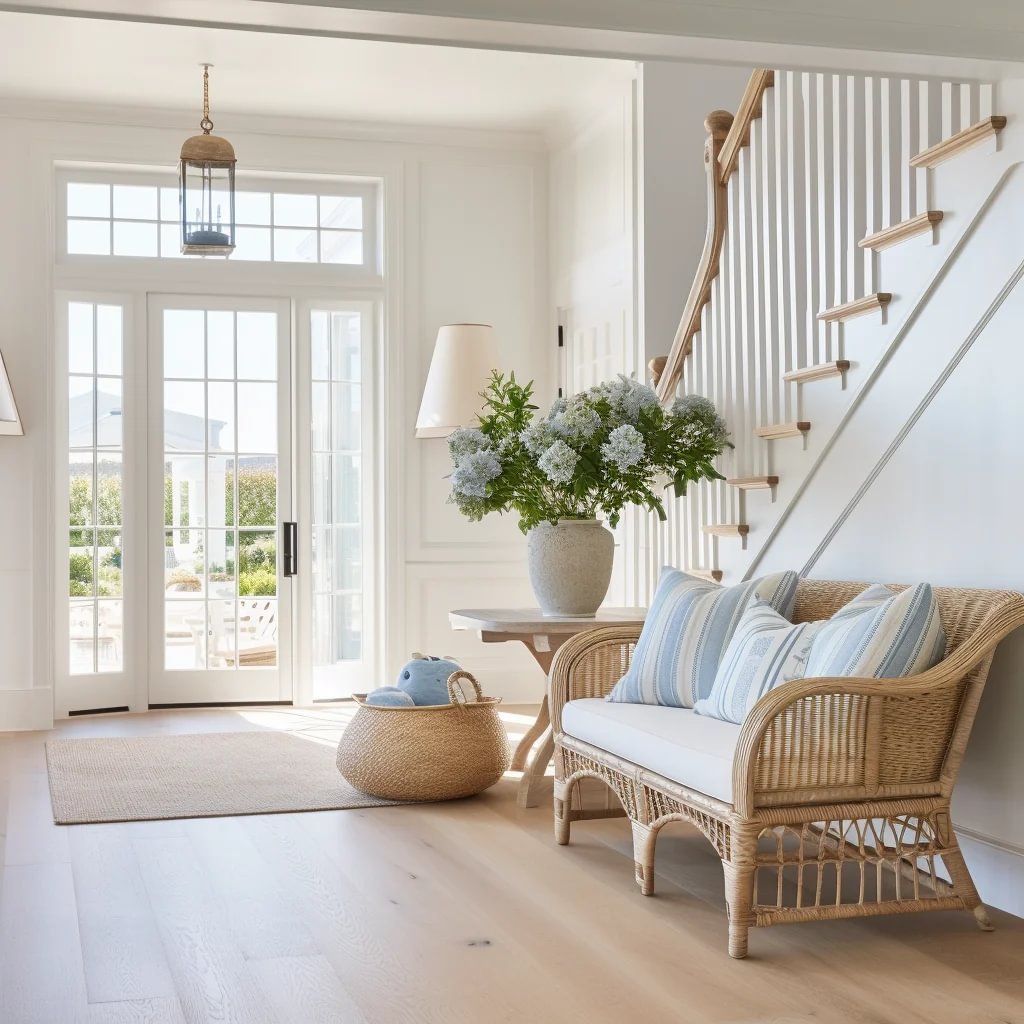
On August 4, 2026, a one-bedroom condo at 39 Millyard closed for $412,500. It had soaring ceilings, exposed timber, and 981 square feet inside a converted 19th-century mill building two minutes from the Powow River. A few blocks away, on the same river, a Point Shore colonial built by a 19th-century ship captain could close for triple that figure without raising an eyebrow. Both are Amesbury sales. Both count toward the same monthly median. And that is exactly the problem with reading Amesbury's home prices off a portal dashboard right now.
Depending on which site you check this month, Amesbury is either in freefall or holding steady. One widely used portal reported a median sale price of $530,000 in March 2026, down 18.8 percent from the year before, on just 11 closed sales. Another reported a median sold price of $647,450 in June 2026 off 36 closings, essentially flat to up. A third tracks average home value at $634,683, up 2.1 percent over the past year. Three sources, three stories, same town, same few months.
None of them are lying. They are all measuring a market too small and too split to produce one stable number.
Why a Handful of Sales Can Swing the Whole Headline
Amesbury is a city of roughly 17,300 people. Its housing market moves in dozens of transactions a month, not hundreds. When Redfin's sample of 11 March closings happened to skew toward smaller mill condos, the reported median dropped hard. That is not a market correction. It is what statisticians call a composition effect: the mix of what sold changed, not the value of what stayed the same.
This is the mechanism a serious buyer needs to understand before comparing Amesbury to anywhere else. A median only means something when the units behind it are similar to each other. In a market with 11 to 36 closings a month, one Point Shore estate or one cluster of Millyard studios can move the needle by tens of thousands of dollars without a single owner in town having lost or gained equity. The headline number is real. It just is not describing one market.
The Two Markets Hiding Inside One Zip Code
Amesbury's housing stock splits cleanly into segments that behave nothing alike, and understanding which one you are shopping in matters more than the citywide median ever will.
The Millyard, where 19th-century textile mills once ran the local economy, has been converting into loft-style condos for years. Units at the Carriage Lofts and Lofts at Clark's Pond trade with exposed brick, timber ceilings, and deeded parking, typically in the $350,000 to $450,000 range for studio and one-bedroom layouts. The building at 37 Millyard listed at $349,000 in early July 2026. The unit at 39 Millyard closed at $412,500 a month later. This is the entry point to Amesbury living, and it draws a different buyer than the rest of the city: someone trading square footage for walkability to the Riverwalk, the breweries, and a five-minute drive to I-95.
Point Shore is the other end of the spectrum. Built along the Merrimack River by ship captains and industry leaders in the 18th and 19th centuries, it carries views toward Maudslay State Park and larger lots with genuine historic weight. Homes here, along with the colonials and capes scattered through the rest of the city and the newer construction off Route 110, are what pull the citywide average well above the Millyard's price band.
| Submarket | Typical product | Recent price signal |
|---|---|---|
| The Millyard / downtown lofts | Converted mill condos, studio to 1BR | 39 Millyard #202 closed at $412,500 (Aug. 2026); 37 Millyard listed at $349,000 (July 2026) |
| Point Shore | 18th and 19th-century single-family, river views | Drives the top of the citywide average; limited turnover |
| Rest of city / Route 110 corridor | Colonials, capes, ranches, newer construction | Bulk of single-family transaction volume |
A buyer comparing "Amesbury" to "Newburyport" on a portal is really comparing an average of these three very different products to Newburyport's own mix. The comparison only holds up once you know which Amesbury you are actually shopping.
The Number That Actually Tells You Something
If the median is noisy, what should a buyer trust instead? Absorption. RE/MAX Bentley's own market data for Amesbury put single-family months of supply at just 0.38, among the tightest readings in the Merrimack Valley. That number describes how long it would take to sell through current inventory at the current sales pace if nothing new came on the market. Below one month, it means homes are being absorbed almost as fast as they list.
Months of supply does not swing the way a monthly median does, because it is built from a ratio of active listings to sales pace rather than from the price of whatever happened to close. It is a better read on whether you are in a competitive market than any single month's median sale price, especially in a city where 11 to 36 sales is the entire monthly sample.
The practical translation: if you are shopping the Route 110 corridor or Point Shore for a single-family home, expect the kind of pace that 0.38 months of supply implies, and be ready to move when the right listing appears. If you are shopping the Millyard for a condo, the calculus is different again, since condo inventory and turnover in mill buildings does not track single-family supply one to one.
In April 2026, the Boston Globe's "Top Spots to Live" feature framed the city as "an up-and-coming area with a flourishing downtown and reasonable prices," pairing it with towns like Hingham that sit at the opposite end of the price spectrum. That framing lines up with what the submarket data shows: relative to river-town peers, Amesbury still offers an entry point, but the entry point looks very different depending on whether you are buying a mill loft or a Point Shore colonial.
What This Means If You Are Actually Shopping Here
A few things follow directly from the mechanism above, and they apply whether you are relocating for a shorter commute, buying a second home near the water, or comparing Amesbury against Newburyport and Salisbury before you commit.
- Do not anchor your budget to a single month's median. Ask which submarket that median was built from and how many sales it represents.
- Price per square foot is a steadier comparison point than the median dollar figure when the sample size is this small, because it partially controls for the size mismatch between condos and colonials.
- Watch the Trade Mill proposal in the Lower Millyard, which would add 124 apartments and commercial space to the district. New supply at that scale, if it moves forward, would eventually shift the condo submarket's own absorption rate, separate from anything happening in Point Shore or along Route 110.
- If you are cross-shopping Amesbury against Newburyport, compare product type to product type, not city median to city median. A Millyard loft and a Newburyport South End Victorian are not competing for the same buyer, and their prices should not be read as competing data points.
None of this means the Amesbury market is complicated to work with. It means the citywide number by itself is not built to answer the question most buyers are actually asking, which is what a specific kind of home, in a specific part of town, is actually worth right now.
A Few Questions Worth Answering Directly
Why do three different sites show three different Amesbury medians in the same season? Each pulls from a different closing window and a different sample of sales. With only a handful of transactions closing in a typical month, whichever properties happen to sell shift the reported median, even when no underlying values have changed.
Is Amesbury a buyer's market or a seller's market right now? Single-family months of supply sat at 0.38 per Bentley's data, which points toward a seller's market for that segment. Condo dynamics in the Millyard can move on a separate timeline as new units come online.
What is actually being built in the Millyard right now? The Trade Mill proposal calls for 124 apartments and commercial space in the Lower Millyard, part of a longer redevelopment push that has already converted several old mill buildings into loft condos over the past decade.
Reading a market this size takes more than a dashboard. It takes knowing which streets, which buildings, and which recent closings actually belong in your comparison set. That is the work Alissa Christie does every day across Amesbury and the wider North Shore, matching the number on the screen to the property behind it. If you are trying to figure out what your budget actually buys here, or how Amesbury stacks up against Newburyport, Salisbury, or Newbury for your specific plans, let's connect.